


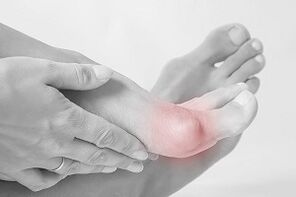
High-quality orthopedic shoes for hallux valgus are one of the reliable ways to combat the disease.
Almost every person faces diseases of the musculoskeletal system.
Diseases can be congenital or acquired.One possible problem in this area is hallux valgus.
This diagnosis is given to both children who have just gotten back on their feet and adults.More often for women, less often for men.
High-quality orthopedic shoes for hallux valgus are one of the reliable ways to combat the disease.
What is hallux valgus?
Valgus deformity is an orthopedic disease of people of different ages and gender.In adults, the disease most often appears after 30 years of age.According to orthopedic doctors, the diagnosis is made in 20-65% of cases when women complain of foot pain.For men, the percentage is lower – 5-15%.The disease is progressive.
When the disease occurs, the anatomy of the foot changes - a lump appears on the first toe, and the toe deviates away from its normal position.Pressure is exerted on the adjacent fingers, as a result of which they change shape, acquiring a “hammer-shaped” appearance.There is a general imbalance in the functions of the muscles, tendons, and ligaments of the foot.Its front part expands, and flat feet appear.In a normal state, when walking, support occurs on the first and last toes.The second, third, fourth form an arc with its apex on the bone of the third finger.With flat feet, all the toes fall like a fan, distributing the pressure among themselves.Changes in anatomy often lead to impaired blood circulation in the front part of the foot, which causes arthritis and arthrosis.
The curvature manifests itself in stages:
- At first, there is a feeling of discomfort when wearing familiar shoes.It seems that she has become smaller and has begun to squeeze her fingers.Choosing comfortable shoes in a store is becoming increasingly difficult - you have to buy a pair larger in size to avoid the feeling of pressure.This happens due to the fact that the angle of deflection of the finger increases;
- By evening there is pain all over the foot.Gradually, the pain “shifts” in time, appearing at any time of the day, and in place, “rising” to the ankle and calf muscles;
- the first finger deviates more and more noticeably to the side, becomes deformed - a growth-bump appears on the joint;
- other fingers are subject to deformation, transverse flatfoot develops;
- the curvature is noticeable to the naked eye, constant pain appears when walking.
The disease can be congenital or acquired.Congenital pathology occurs due to disturbances in the formation of the bones of the foot and their position during intrauterine development.The congenital disease manifests itself in the first few months after birth.
There are several reasons for the development of acquired “valgus foot”:
- muscle hypotonicity.Diagnosed in premature babies, newborns with poor health, and retarded physical development.Hypotonia is one of the signs of rickets.Long-term wearing of a cast can lead to hypotonia;
- improper development of ligaments, muscles, tendons, other diseases of the musculoskeletal system (for example, osteoporosis);
- some diseases - cerebral palsy, polio, dysplasia;
- injuries – fractures, sprains, foot dislocations;
- obesity.Too much weight increases pressure on the foot, especially the first toe, leading to flat feet;
- wrong shoes.The reason for the more frequent manifestation of the disease in women is narrow-toed high-heeled shoes.In these “pumps,” the body weight rests on the front of the foot.The foot becomes deformed and growths appear on the bone of the first toe.Therefore, it is not recommended to wear the “hairpin” for a long time; it should be worn only on special occasions for a maximum of 2 hours.For everyday wear, it is better to choose comfortable shoes with low, stable heels.
One of the common causes of deformity in children is standing on their feet too early, when the muscles and ligaments are not yet ready for such high loads.You can determine the curvature by watching how the child walks.With normal development, the leg is placed on the entire foot, with pathology - only on its inner part.Incorrect development can be determined by the way the shoes are worn - they are worn out on the inside.
The development of the disease is characterized by a violation of the shape of the lower part of the leg - in the form of the letter X. The gait becomes uncertain and awkward.Pathology appears not only externally.The child talks about pain in the ankle and back when walking, and avoids active games.By evening, your legs may swell and cramps in your calves begin.If the symptoms are left unattended, the disease progresses, and concomitant diagnoses appear - arthrosis, scoliosis, deformation of the knee and ankle joints.
Orthopedic shoes for hallux valgus: advantages, types
Treatment of the disease depends on the degree of its manifestation and the severity of pain.In an advanced stage, the pathology can often only be corrected by surgery - removing the growth on the finger.In the early stages, the disease can be successfully treated with exercise therapy, physiotherapy, and anti-inflammatory medications.Painkillers are prescribed to reduce pain.
An important part of treating hallux valgus is wearing orthopedic shoes.
- It helps to properly distribute the load on the foot, which improves the development of muscles and ligaments.The load on joints subject to excess stress is reduced.
- Stops joint deformation.
- Evenly distributes the load across the entire musculoskeletal system.
- Correct, beautiful gait and posture are formed.
If hallux valgus is diagnosed, orthopedic shoes are not a panacea that solves all problems.But it is an important part of an integrated approach to treatment, relieving symptoms and preventing progression of the disease.Wearing special therapeutic boots is prescribed for preventive purposes to prevent recurrence of the disease after a successful operation.
Orthopedic shoes are selected depending on the type and degree of development of the deformity.Its main purpose is to maintain the correct position of the leg, preventing curvature of the foot.
Those times when orthopedic shoes attracted attention with their ugly appearance are a thing of the past.Today these are not only comfortable, but also attractive in appearance.The stores have options for different seasons - summer, winter, demi-season.Manufacturers produce all styles of orthopedic shoes: boots, shoes, boots, sandals, sneakers.The healing versions look very beautiful, outwardly no different from ordinary pairs.
In the development of orthopedic pads, not only the degree and form of the disease, but also the patient’s gender and age are taken into account.In men, women, and children, the disease progresses differently; to correct the deformity, you have to pay attention to different points.
Orthopedic shoes for men
In men, hallux valgus is rare.But the disease still occurs in them and becomes a consequence of various concomitant diseases.The doctor may recommend wearing therapeutic shoes if there is a risk of developing such a deformity, to prevent curvature.Especially if there are diagnoses such as obesity, flat feet, inflammatory processes in the ligaments often occur.
Finding the right pair of boots is no easy task.They should fit well on the foot, not cause discomfort, and provide good support for the arch of the foot and ankle.Sometimes you can't find the right pair in the store.Then it is made to order.To do this, they take a cast of the leg, first make a three-dimensional plaster model for the last, then the last itself, from which the parts for the future pair are cut out.The process is complex and expensive, so the price of such a sample is quite high.
Orthopedic shoes for women
In women, such curvature occurs several times more often.One of the reasons is the habit of constantly wearing high-heeled shoes.Some women wear their favorite stiletto heels all day, taking them off only at night.The forefoot and first toe are constantly under stress, bearing the entire body weight.The narrow toes of the shoes also do not improve the situation.The finger is constantly squeezed, its blood circulation is disrupted, which also leads to illness.Over the years, the foot becomes deformed, pain appears in the fingers and ankle.You have to give up your favorite shoes and switch to low heels.But a regular last is not able to cope with the situation - the feeling of discomfort when walking does not disappear.Therapeutic shoes help to evenly distribute the load and stop the progressive nature of the disease.
The range of medicinal samples for women is wide.In stores and online catalogs there are orthopedic boots, shoes, boots, summer open sandals of different colors, styles, made of natural, artificial leather, suede, nubuck.The sole is a wedge heel or a small heel (maximum 5 centimeters).The different fullness of the leg is taken into account - many samples can be adjusted in width with straps or multi-level fasteners.
Orthopedic shoes for children
The pediatrician prescribes the wearing of therapeutic boots for children both when a curvature has already been identified, and for preventive purposes.There are two types of children's models:
- low complexity.They have insert elements (insoles, ankle boots), whose task is to correct the violation.For convenience, these elements can be sewn into the model;
- complex.Boots are made to order, based on a cast of the foot made after measurements.
To prevent curvature, pediatricians advise wearing therapeutic shoes from early childhood.Parents should exclude slippers, sandals, and flat-soled sneakers without arch support.
What to look for when choosing shoes
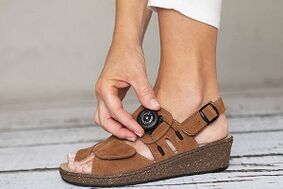
An orthopedic pair is chosen personally, since each leg has its own characteristics.When worn, shoes “adjust” to the shape of the foot.Parents need to remember: a child should not wear shoes after older children, otherwise his foot will develop the same pathologies as theirs.
When choosing a treatment version for children, it is important to consider:
- quality of materials.Couples are made for the child from natural materials.They allow air to pass through well, allowing the foot to “breathe”;
- quality of tailoring.Carefully inspect the boot, the quality of the stitching, the inner surface - there can be no protruding seams, all elements are sewn neatly.This will prevent the appearance of chafing during wear;
- compliance with the anatomy of the leg.A doctor’s recommendation will help, who will indicate what details you need to pay attention to;
- true to size.You shouldn’t buy sneakers for your baby to grow into, which is what many parents do, given how quickly children’s feet grow.In shoes that are too large, it will be uncomfortable for him to walk, his gait will become unsteady and shuffling.The habit of shuffling your feet will remain even after the foot “grows” to the shoe.A shoe that is too small will put pressure on the foot, causing even more bowing.Shoes for your baby must be chosen exactly in size.
Pay attention to each element of the pair.Inside the shoe there is a dense, wrinkle-resistant insole.The sole has a small heel that gives the foot the correct position and prevents the appearance of flat feet.The sole itself is also important.It is better if it has rolling elements.Particular attention should be paid to winter shoes.Make sure that the sole is made of frost-resistant materials and will not slip.
The boots are specially designed for children with deformed feet.The last is comfortable and supports the foot well in the correct position.To do this, a comfortable instep support, side boots, and a high hard heel are sewn into children's boots.Additional support is provided by laces, Velcro, and multi-level fasteners.
When buying shoes for an adult, also make sure they fit correctly.Too tight ones will compress the foot, and too loose ones will not prevent further deformation.Shoes must fit not only in length, but also in width.The right pair fits the foot well, but does not put pressure on it.Pay attention to the backdrop - it should be dense and high.Otherwise, the shoes will not support the foot well in the correct position.The weight of the pair is of great importance.Shoes that are too heavy will cause tired feet.
Often, orthopedic shoes are made by craftsmen in salons according to personal measurements.There are manufacturers that produce such samples en masse.